





Dry fruits are naturally convenient, nutritious and easy to keep at home. But even high-quality dry fruits can lose their freshness when they are exposed to heat, moisture, air or direct sunlight.
Whether you regularly enjoy almonds, walnuts, cashews, pistachios, raisins, dates or other dried fruits, proper storage can make a noticeable difference in their taste and texture.
In this guide, Northern Harvest explains how to store dry fruits properly, where to keep them, when refrigeration is useful, which containers work best and how to recognize signs that your dry fruits may no longer be at their best.
What Is the Best Way to Store Dry Fruits?
The best way to store dry fruits is to keep them in an airtight container in a cool, dry and dark place. For longer storage, especially in warm or humid conditions, refrigeration can help maintain quality. Always protect dry fruits from moisture, heat, direct sunlight and strong odors.
What You'll Learn
Why Proper Dry Fruit Storage Matters
Dry fruits may contain less water than fresh fruits, but that does not mean they are completely protected from quality loss. Nuts and dried fruits can gradually be affected by air, humidity, heat and light.
Nuts such as almonds, walnuts and cashews contain natural oils. When exposed to unsuitable conditions for too long, these oils can affect the aroma and flavor of the product.
Raisins, dates and other dried fruits can also become too dry, sticky or affected by moisture when stored incorrectly.
Four Things to Control
- Excess moisture
- Heat and temperature changes
- Air exposure
- Direct sunlight
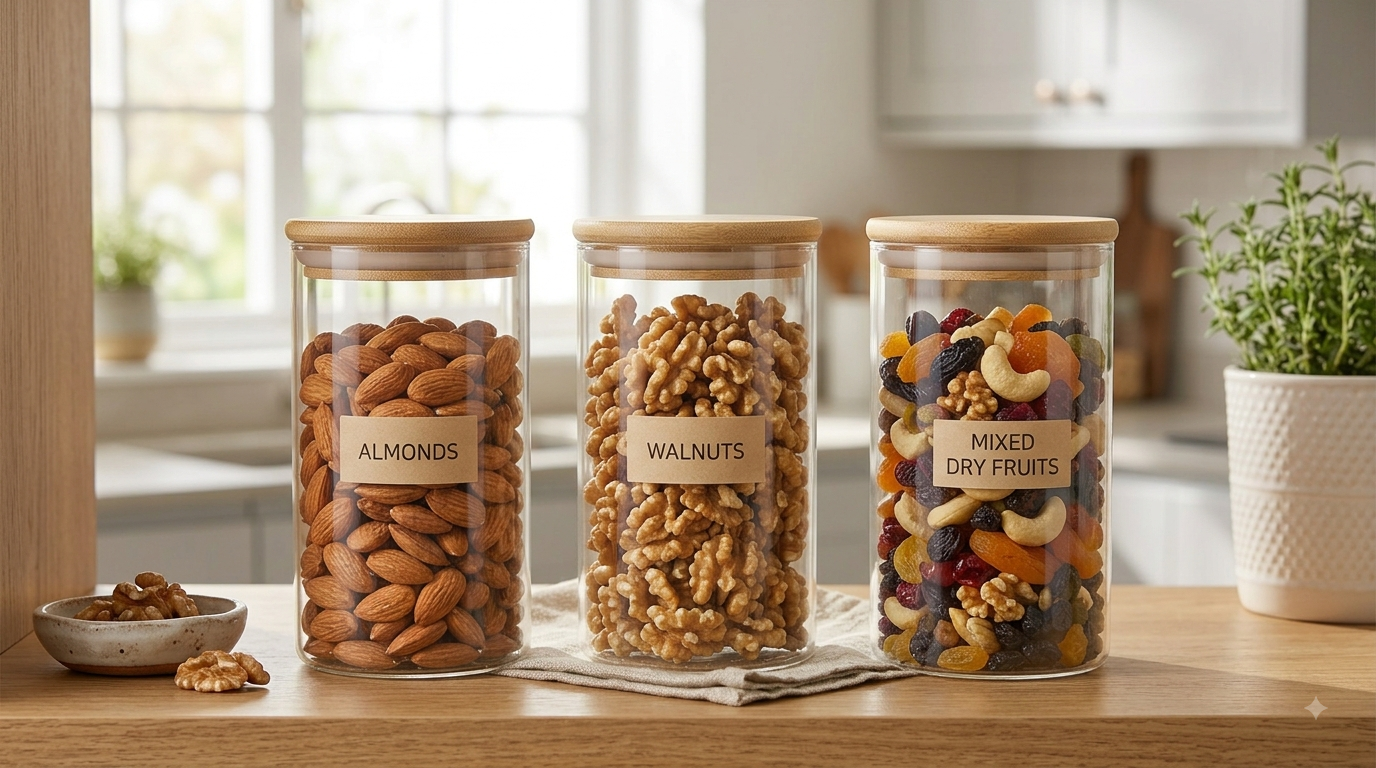
What Is the Best Container for Dry Fruits?
Choosing the right container is one of the easiest ways to improve dry fruit storage at home. The goal is to reduce exposure to air and moisture while keeping the product clean and protected.
Glass Airtight Jars
Glass jars with tight-fitting lids are an excellent option for everyday storage. They are easy to clean and help protect dry fruits from outside moisture and odors.
Food-Grade Containers
High-quality food-grade containers with secure lids can also work well, especially when you want lightweight and practical kitchen storage.
Resealable Bags
Resealable food-safe bags can be useful for short-term storage or smaller portions, provided they are properly sealed and kept away from heat and moisture.
Avoid leaving dry fruits in an opened package for long periods. Once opened, transfer them to an airtight container whenever practical.
Where Should You Store Dry Fruits?
A cool and dry cupboard can be suitable for dry fruits that you plan to consume relatively soon. However, the ideal storage location can depend on the type of dry fruit, your home's temperature and humidity, and how long you want to keep it.
Cool Kitchen Cabinet
Choose a clean cabinet away from the stove, oven, dishwasher and direct sunlight.
Refrigerator
Refrigeration can be useful for many nuts and certain dry fruits when you want to extend freshness.
Near Heat Sources
Avoid storing dry fruits beside ovens, stoves, heaters or places exposed to strong sunlight.
Should Dry Fruits Be Refrigerated?
Refrigeration can be a useful option for many dry fruits, particularly when your home is warm or humid or when you want to keep certain nuts fresh for a longer period.
Nuts such as walnuts, almonds and cashews may benefit from cooler storage because they contain natural oils that can gradually affect flavor when exposed to unfavorable conditions.
How to Store Different Dry Fruits
Different dry fruits have different textures and natural oil content, so a single storage method may not always be ideal for every product.
| Dry Fruit | Storage Tip | Best Practice |
|---|---|---|
| Almonds | Keep airtight and protected from heat. | Refrigerate for longer storage. |
| Walnuts | Protect from heat, air and moisture. | Cool storage is useful for maintaining freshness. |
| Cashews | Use an airtight container. | Keep in a cool, dry location. |
| Pistachios | Keep sealed after opening. | Avoid humid environments. |
| Raisins | Protect from excess moisture. | Use a tightly sealed food container. |
| Dates | Keep sealed and clean. | Refrigeration can be useful for longer storage. |
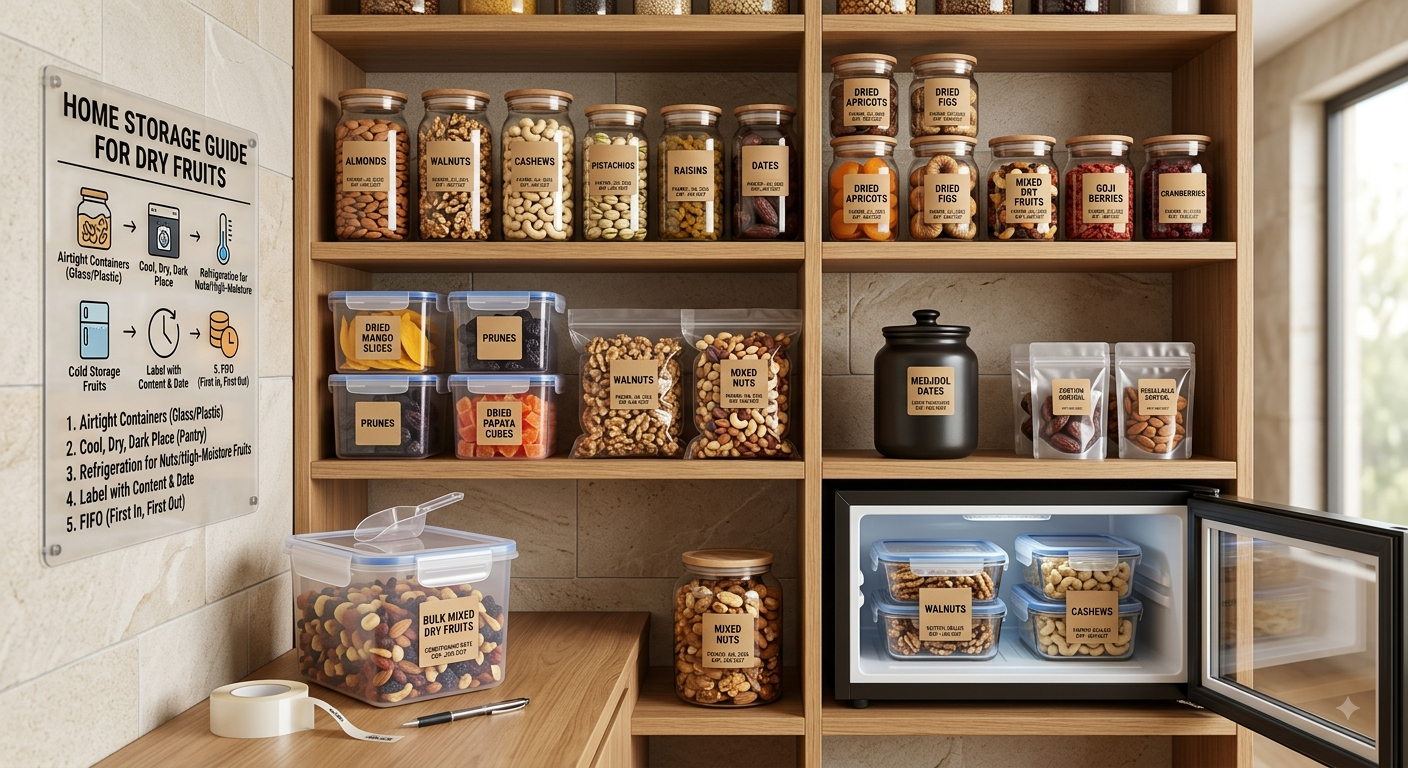
7 Common Dry Fruit Storage Mistakes
Leaving the Packet Open
Open packaging allows greater exposure to air, humidity and kitchen odors.
Storing Near the Stove
Heat can negatively affect the quality and flavor of dry fruits over time.
Using a Damp Container
Always make sure your storage container is completely clean and dry before use.
Ignoring Sunlight
Direct sunlight and unnecessary heat are best avoided during storage.
Mixing Everything Together
Different dry fruits have different textures and aromas, so separate containers can be helpful.
Using Wet Hands or Spoons
Moisture should be kept away from stored dry fruits whenever possible.
Buying More Than You Can Use
Buying practical quantities helps you enjoy dry fruits while they are fresh and flavorful.
How Can You Tell If Dry Fruits Are Still Fresh?
Before eating stored dry fruits, check their appearance, smell and overall quality. Storage conditions can influence how quickly quality changes.
Fresh & Good
- Normal appearance
- Natural aroma
- Expected texture
- No visible mold
Check Carefully
- Unusual smell
- Unexpected moisture
- Major texture changes
- Unusual discoloration
Do Not Consume
- Visible mold
- Strong unpleasant odor
- Obvious spoilage
- Anything that looks unsafe
When in doubt, discard it. Appearance and smell are useful quality checks, but they cannot guarantee food safety.
Start With Quality Dry Fruits
Good storage begins with choosing quality dry fruits and handling them properly from the moment they arrive in your kitchen. Look for clean packaging, appropriate storage instructions and products from a trusted source.
At Northern Harvest, our approach is simple: quality products deserve thoughtful handling, careful storage and a better everyday experience.
Thoughtfully selected dry fruits for everyday enjoyment.
Frequently Asked Questions About Dry Fruit Storage
What is the best way to store dry fruits?
Store dry fruits in clean, dry and airtight containers. Keep them away from heat, moisture and direct sunlight. Refrigeration can be useful for longer storage, depending on the type of dry fruit and your home environment.
Can dry fruits be stored in the refrigerator?
Yes. Refrigeration can be useful for many nuts and some dried fruits, particularly when you want to maintain freshness for longer. Keep them tightly sealed to protect them from moisture and refrigerator odors.
Should almonds be refrigerated?
Almonds can be refrigerated for longer storage. For shorter periods, an airtight container in a cool, dry and dark place may also be suitable.
How should walnuts be stored?
Store walnuts in an airtight container away from heat, moisture and sunlight. Cooler storage can be helpful when keeping walnuts for a longer period.
What container is best for dry fruits?
Airtight glass jars and quality food-grade containers are practical choices. The most important feature is a secure seal that limits exposure to air and moisture.
Can different dry fruits be stored together?
They can be stored together in some situations, but separate airtight containers are often better because different dry fruits have different textures, moisture levels and natural aromas.
How do I know if dry fruits have gone bad?
Look for unusual odors, visible mold, unexpected moisture, significant discoloration or other obvious signs of spoilage. If a product appears unsafe or you are unsure about it, it is better to discard it.
Keep Your Dry Fruits Fresh With Simple Storage Habits
You do not need complicated equipment to store dry fruits properly. A clean airtight container, a cool storage location and protection from moisture, heat and sunlight can make a big difference.
Whether you enjoy almonds in the morning, walnuts as a snack or raisins with your favorite recipes, taking a few extra minutes to store them correctly helps you enjoy their natural taste and texture for longer.
NORTHERN HARVEST